Alain Pham | September 15, 2024
The crackle and hiss of an old vinyl record had just reached “La Vie en Rose” while I was sketching a new menu inspired by the utility pole in front of my house. “Quand il me prend dans ses bras; qu’il me parle tout bas; je vois la vie en rose.” Edith Piaf wrote those words for her lover, Yves Montand, after WWII; they tell of being held close and whispered to, until life itself turns the color of roses.
It had nothing to do with naming the menu at first. But reflecting on those lyrics, I realized I, too, have been held in more than one embrace, the embrace of Saigon, of my neighbors, my family, and of life in that land of Nam Ky. The name “La Vie en Nam” flashed through my mind. Grammatically, it is entirely wrong, yet it felt right, a phrase that simply flowed off the tongue
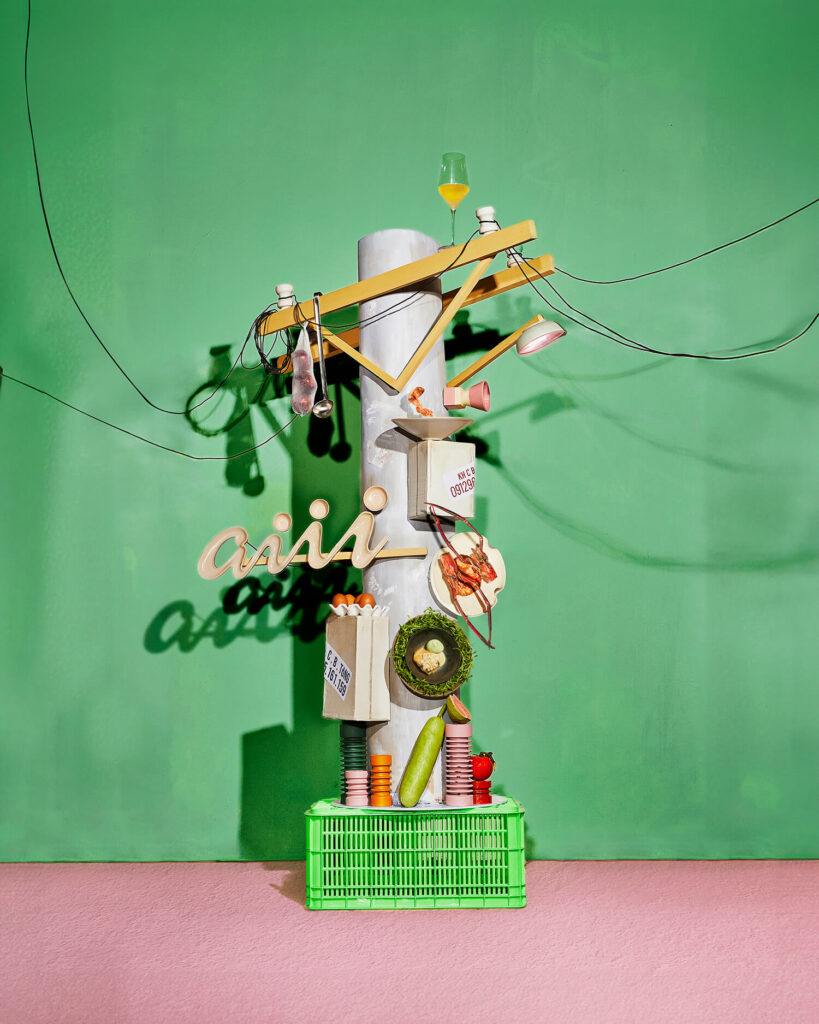
To express “La Vie en Nam” is to tell the story of a utility pole plastered with layers of “concrete cutting” advertisements, or a rusted electrical box tangled in a web of wires. It is the scent of grilled pork ribs thickening the air of an alleyway every morning, the call of a flan cake cart passing by, and the rhythmic “clack-clack” of a noodle vendor’s bamboo instrument echoing through the neighborhood.
Immersed in that alley, under a vast sky, Saigon was generous; its energy enveloped Southern life back then. I grew up there, “climbing the utility pole” to look out at the world, realizing I was small and that life isn’t always rosy. But eventually, “il est entré dans mon coeur; une part de bonheur”—it entered my heart, and those memories became a piece of my happiness.
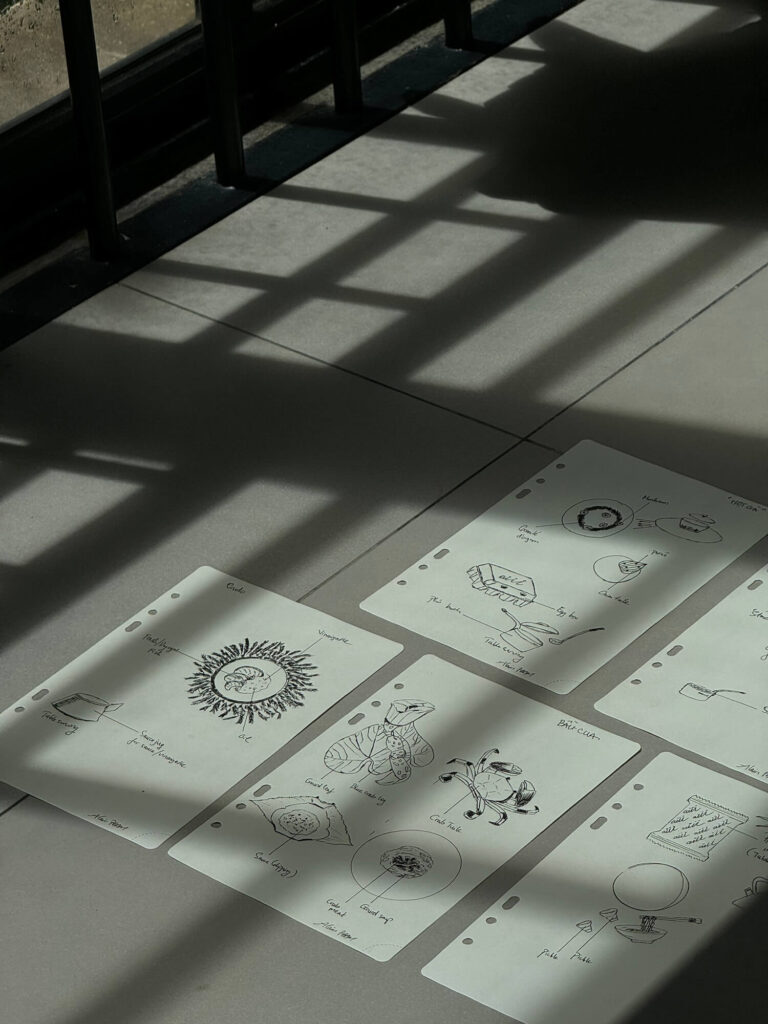
I wanted this to be an intimate beginning. In “La Vie en Nam,” you won’t find overly complex techniques, ultra-premium ingredients, or vague concepts. Instead, it is a collection of simple ideas redrawn—poems rewritten through the eyes of a young boy. In “La Vie en Nam,” I can still roll the dice and jump for joy after winning a game against a friend. Here, I am simply rebuilding textures and flavors—specifically, the flavors of my own home.
Just as “La Vie en Rose” became famous after Piaf and Montand had already parted ways, “La Vie en Nam” is reimagined from the lingering fragments of an old alleyway that I left behind a long time ago.